
Cotard Syndrome and Mental Health
What Is Cotard Syndrome?
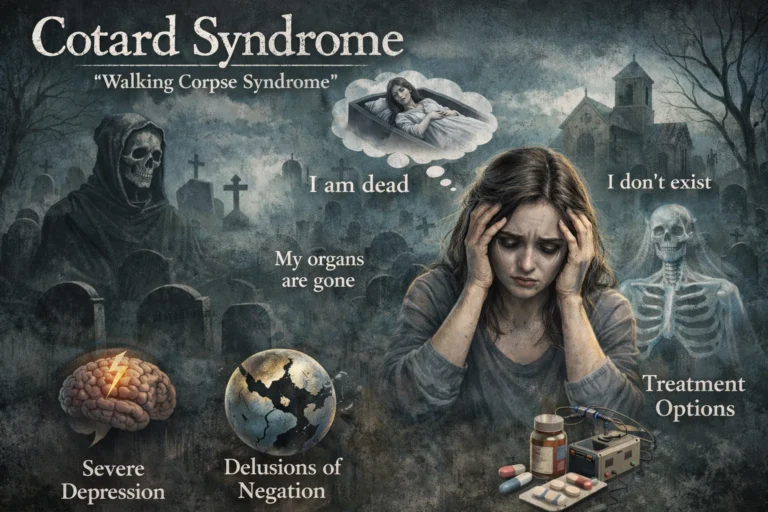
Mental health conditions can sometimes produce unusual and deeply distressing experiences that alter how a person perceives reality. Among the rarest and most fascinating psychiatric conditions is Cotard Syndrome, a disorder in which a person may believe that they are dead, do not exist, or have lost vital organs or bodily functions. Because of these extreme beliefs, the condition is often informally referred to as “Walking Corpse Syndrome.”
Cotard Syndrome is classified as a delusional disorder involving nihilistic beliefs, meaning the affected person strongly believes that parts of their body, their identity, or even the entire world no longer exist. These beliefs are not simply philosophical ideas but rather fixed delusions that persist despite medical reassurance or logical explanations.
Although Cotard Syndrome is extremely rare, it is usually associated with severe mental health conditions such as major depressive disorder with psychotic features, schizophrenia, or certain neurological disorders. The condition can have serious consequences for both mental and physical health because individuals suffering from it may stop eating, neglect personal hygiene, or withdraw from society due to the belief that they are already dead.
Understanding Cotard Syndrome is important not only for mental health professionals but also for the general public. Increased awareness can help people recognize unusual symptoms early and encourage individuals to seek professional psychiatric care before the condition leads to severe complications.
History and Discovery of Cotard Syndrome in Psychiatry
Cotard Syndrome was first described in 1880 by the French neurologist Jules Cotard. He presented a case involving a woman who believed that she had no brain, no nerves, and no internal organs. She insisted that she was already dead and therefore did not need food or medical treatment.
Cotard referred to this condition as “Le délire de négation,” which translates to “the delusion of negation.” This term described the patient’s strong belief that her body and existence had essentially disappeared.
Over time, psychiatrists began to identify similar cases in different parts of the world. Patients suffering from the syndrome expressed various forms of nihilistic beliefs. Some believed their bodies were decomposing, others felt their organs had stopped functioning, and some even believed the entire world had ceased to exist.
Although the syndrome is named after Cotard, it is not recognized as a separate disorder in many diagnostic manuals. Instead, it is usually considered a symptom or manifestation of other severe psychiatric or neurological conditions.
Despite its rarity, Cotard Syndrome has remained an important topic in psychiatry because it illustrates how mental illnesses can profoundly alter a person’s perception of reality and self-identity.
Understanding the Core Delusion in Cotard Syndrome
The most defining characteristic of Cotard Syndrome is the presence of nihilistic delusions. These delusions involve the belief that something fundamental about existence has disappeared. For individuals with this syndrome, the belief often centers around their own body or identity.
A person suffering from Cotard Syndrome may firmly believe that they are already dead or that their body has stopped functioning. Some patients claim that their organs are missing, their blood has disappeared, or their body has begun to decay. Others feel that their soul has left their body or that they no longer exist as a living person.
These beliefs are not temporary thoughts or philosophical ideas. They are fixed delusions, meaning the person continues to believe them even when presented with clear evidence that contradicts their perception.
In many cases, the delusion is accompanied by profound feelings of guilt, hopelessness, or emotional emptiness. Some individuals may feel that they deserve punishment or believe they have committed unforgivable sins. This emotional state can strengthen the belief that they are no longer alive or do not deserve to exist.
Because of the intensity of these beliefs, individuals with Cotard Syndrome may stop engaging in daily activities. They may withdraw from family and friends, avoid medical care, and refuse to eat because they believe that a dead person does not require food.
Symptoms of Cotard Syndrome: Signs of Nihilistic Delusion
The symptoms of Cotard Syndrome can vary widely depending on the underlying psychiatric condition and the severity of the delusion. However, the most prominent feature is the persistent belief that the person is dead, does not exist, or has lost important parts of their body.
Psychological symptoms of Cotard syndrome
Psychologically, patients may experience intense nihilistic delusions about their body or existence. They may insist that their organs are missing or that their blood has stopped circulating. Some individuals report feeling that their body is decaying or turning into dust. These beliefs can be so powerful that the person rejects all medical explanations and remains convinced of their delusion.
Emotional symptoms linked to severe depression
Emotionally, Cotard Syndrome is often accompanied by severe depression. Patients may feel overwhelming sadness, guilt, and hopelessness. They may believe that they are worthless or that their existence has no meaning. Emotional numbness is also common, with individuals reporting that they can no longer feel joy, love, or connection to others.
Behavioral symptoms and social withdrawal
Behaviorally, the syndrome can lead to significant changes in daily functioning. Many patients withdraw from social interactions and isolate themselves from family members. They may stop participating in work, education, or other responsibilities. Personal hygiene may also decline because the person believes their body no longer requires care.
In some cases, patients refuse to eat or drink because they believe their body is already dead and does not need nourishment. This behavior can lead to serious physical health complications such as malnutrition and dehydration.
Cognitive symptoms may include confusion, distorted thinking, and difficulty distinguishing between reality and delusion. These symptoms are often linked to the underlying psychiatric or neurological disorder that triggered the condition.
What Causes Cotard Syndrome? Psychological and Neurological Factors
The exact cause of Cotard Syndrome remains unclear, but researchers believe that it results from a combination of psychological, neurological, and biological factors.
Severe depression as a major cause
One of the most common underlying conditions associated with Cotard Syndrome is severe depression, particularly depression with psychotic features. In such cases, the individual’s mood becomes so deeply negative that it distorts their perception of reality. Feelings of extreme guilt, worthlessness, and hopelessness may eventually evolve into the belief that the person no longer exists or deserves to live.
Psychotic disorders and delusional thinking
Another possible cause is psychotic disorders, such as schizophrenia. Psychotic conditions can alter the brain’s ability to process reality accurately, leading to delusions and hallucinations. When nihilistic themes appear in these delusions, they may resemble the symptoms seen in Cotard Syndrome.
Neurological disorders affecting brain perception
Neurological conditions can also contribute to the development of the disorder. Brain injuries, tumors, strokes, epilepsy, and degenerative diseases such as Parkinson’s disease have all been linked to cases of Cotard Syndrome. These conditions may affect areas of the brain responsible for self-awareness, emotional processing, and perception of bodily sensations.
Some researchers believe that abnormalities in specific brain networks may play a role in the syndrome. The areas involved in recognizing oneself and processing emotions may not communicate properly, creating a disconnect between perception and reality.
Psychological trauma or extreme stress may also act as a triggering factor in some individuals. Major life events, prolonged emotional distress, or significant loss can contribute to severe depression or psychosis, which may eventually lead to nihilistic delusions.
Cotard Syndrome Risk Factors
Although Cotard Syndrome is rare, certain factors may increase the likelihood of developing the condition. Individuals with a history of severe depression are considered to be at higher risk, particularly if the depression includes psychotic symptoms.
People diagnosed with schizophrenia or other psychotic disorders may also develop nihilistic delusions similar to those seen in Cotard Syndrome. These disorders affect the brain’s ability to interpret reality, which can lead to unusual and persistent beliefs.
Neurological conditions are another important risk factor. Brain injuries, strokes, and neurodegenerative diseases may alter brain function in ways that affect self-perception and emotional regulation.
Age may also play a role. Some studies suggest that Cotard Syndrome appears more frequently in older adults, particularly those experiencing neurological disorders or severe depression.
Social isolation and chronic emotional stress can further increase vulnerability to severe mental health conditions. When individuals lack emotional support or access to mental health care, symptoms may worsen and progress to more extreme forms of delusional thinking.
Diagnosis of Cotard Syndrome: How Psychiatrists Identify the Condition
Diagnosing Cotard Syndrome can be challenging because it is not classified as a standalone disorder in most psychiatric diagnostic systems. Instead, it is usually identified as a symptom within another mental health or neurological condition.
A mental health professional typically begins the diagnostic process with a comprehensive psychiatric evaluation. During this assessment, the clinician explores the patient’s thoughts, emotions, beliefs, and behaviors in detail. The presence of persistent nihilistic delusions is a key indicator of Cotard Syndrome.
The evaluation also includes an assessment of mood symptoms, such as depression or anxiety, as well as signs of psychosis. Understanding the underlying condition is essential for developing an effective treatment plan.
Medical examinations may also be conducted to rule out neurological causes. Brain imaging techniques such as MRI or CT scans may be used to identify structural abnormalities, tumors, or other brain conditions that could contribute to the symptoms.
Blood tests and neurological assessments may also be performed to evaluate overall physical health and detect potential medical conditions that could influence mental functioning.
Treatment for Cotard Syndrome: Medications, Therapy, and ECT
Although Cotard Syndrome can be extremely distressing, it is often treatable with appropriate psychiatric care. Treatment usually focuses on addressing the underlying mental health or neurological disorder responsible for the symptoms.
Antidepressant and antipsychotic medications
Medication is often a key component of treatment. Antidepressant medications may be prescribed when the syndrome is associated with severe depression. These medications help regulate brain chemicals involved in mood and emotional stability.
Antipsychotic medications may also be used to reduce delusional thinking and restore a more accurate perception of reality. In some cases, mood stabilizers may be recommended if the symptoms occur alongside mood disorders such as bipolar disorder.
Role of electroconvulsive therapy (ECT)
One of the most effective treatments for severe cases of Cotard Syndrome is electroconvulsive therapy (ECT). ECT involves delivering controlled electrical stimulation to the brain while the patient is under anesthesia. This treatment has been shown to produce rapid improvement in severe depression with psychotic symptoms, including nihilistic delusions.
Psychotherapy and counseling support
Psychotherapy can also play an important role in recovery. Through therapy, patients can gradually explore their beliefs, understand their emotional experiences, and develop healthier ways of interpreting their thoughts and feelings.
In situations where the patient’s safety is at risk, hospitalization may be necessary. This allows mental health professionals to provide intensive treatment and ensure that the individual receives adequate nutrition, medical care, and psychological support.
Complications of Untreated Cotard Syndrome
If Cotard Syndrome is not treated, it can lead to serious mental and physical health complications. One of the most concerning consequences is the risk of severe malnutrition. Because some patients believe their body is already dead, they may refuse to eat or drink.
The condition can also lead to extreme social isolation. Individuals may withdraw completely from their families and communities, which can worsen depression and reduce opportunities for treatment.
Self-harm and suicidal behavior are also significant concerns. In some cases, individuals may attempt to harm themselves in an effort to prove that they are already dead or to escape the distress caused by their delusions.
Long-term untreated psychiatric symptoms can result in chronic disability, affecting a person’s ability to work, maintain relationships, and function independently.
Importance of Mental Health Awareness for Rare Psychiatric Disorders
Early recognition and treatment of severe mental health symptoms can significantly improve outcomes for individuals experiencing Cotard Syndrome. When psychiatric care is provided promptly, many patients show substantial improvement and regain a more accurate perception of reality.
Mental health awareness also helps people recognize unusual symptoms early and seek professional help without hesitation. Consulting an experienced Psychiatrist in Lucknow can ensure proper diagnosis, timely treatment, and better recovery for individuals facing complex mental health conditions.
Access to qualified mental health professionals, supportive family environments, and appropriate medical treatment can greatly enhance recovery and quality of life.
Conclusion
Cotard Syndrome is a rare but serious psychiatric condition characterized by nihilistic delusions about existence, death, or the absence of bodily functions. Individuals affected by this syndrome may believe they are already dead or that their body has ceased to function.
Although the condition can be deeply distressing and disruptive to daily life, it is often associated with treatable mental health disorders such as severe depression or psychosis. With proper psychiatric evaluation, medication, therapy, and in some cases electroconvulsive therapy, many individuals can experience significant improvement.
Raising awareness about rare mental health conditions helps promote early diagnosis and timely treatment. Recognizing unusual symptoms and seeking professional support can make a critical difference in protecting both mental and physical well-being.
FAQs
1. Can Cotard syndrome be cured?
Cotard syndrome can often be effectively treated, especially when the underlying mental health condition is properly addressed. Treatment usually involves a combination of medications such as antidepressants or antipsychotics, psychotherapy, and in some severe cases electroconvulsive therapy (ECT). With timely psychiatric care, many patients experience significant improvement in their symptoms.
2. Is Cotard syndrome related to depression?
Yes, Cotard syndrome is frequently associated with severe depression, particularly major depressive disorder with psychotic features. In such cases, intense feelings of guilt, hopelessness, and worthlessness may evolve into nihilistic delusions where a person believes they are dead or no longer exist.
3. Why do people believe they are dead in Cotard syndrome?
People with Cotard syndrome experience nihilistic delusions, which are false beliefs that parts of their body, their identity, or even the entire world no longer exist. These delusions may arise due to severe depression, psychosis, or certain neurological conditions that affect how the brain processes reality and self-awareness.
4. Is walking corpse syndrome a real mental disorder?
Yes, “Walking Corpse Syndrome” is a commonly used nickname for Cotard syndrome. It refers to the condition where a person believes they are dead, decomposing, or do not exist. Although it is extremely rare, it is a recognized psychiatric phenomenon typically linked to severe mental health disorders.
5. How rare is Cotard syndrome?
Cotard syndrome is considered a very rare psychiatric condition. Only a limited number of cases have been reported in medical literature worldwide. Because it usually occurs alongside other severe psychiatric or neurological disorders, it is most often diagnosed by mental health specialists during comprehensive psychiatric evaluations.