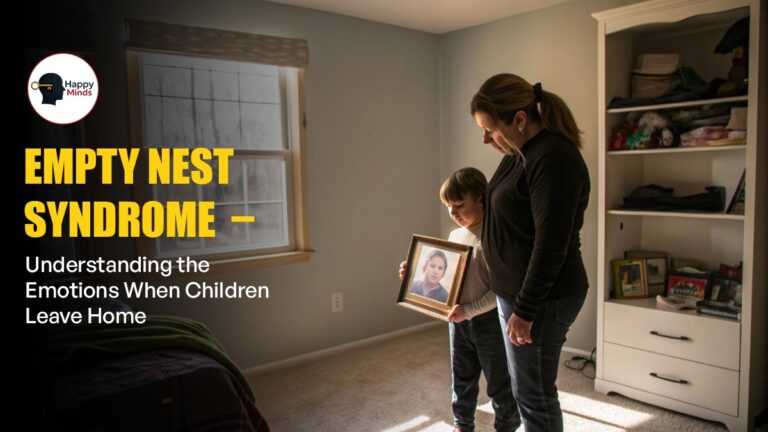

Empty Nest Syndrome – Understanding the Emotions When Children Leave Home
Empty Nest Syndrome – Understanding the Emotions When Children Leave Home
By Dr. Pranshu Agarwal | Happy Minds Psychiatry Clinic, Lucknow
Parenthood is one of life’s most fulfilling journeys — from a child’s first steps to their first day of college, every moment creates lasting emotional bonds. Yet, when the time comes for children to move away for higher studies, work, or marriage, many parents experience an unexpected void. The house suddenly feels quieter, routines change, and emotions swing between pride and loneliness.
This phase is often referred to as Empty Nest Syndrome (ENS) — a period marked by feelings of sadness, loss, and emotional readjustment when children leave home. While not a formal psychiatric disorder, ENS can significantly affect mental and emotional well-being.
At Happy Minds Psychiatry Clinic, under the guidance of Dr. Pranshu Agarwal (MBBS, MD Psychiatry), we understand that transitions like these can be emotionally overwhelming. With timely support, self-awareness, and professional help, this period can transform into a time of rediscovery and personal growth.
Understanding Empty Nest Syndrome
Empty Nest Syndrome describes the emotional difficulties parents face after their children move out. The “empty nest” symbolizes the home once filled with noise, care routines, and shared experiences that now feels unusually silent.
Though not classified as a mental illness, ENS can evoke strong emotional reactions such as:
- Persistent sadness or crying spells
- Anxiety about the children’s safety and future
- Loss of purpose or direction
- Sense of isolation or worthlessness
Both mothers and fathers can experience it, though the intensity varies. Mothers who were primary caregivers often face deeper emotional distress, while fathers might channel feelings into work or hobbies.
In Indian families, where emotional interdependence between parents and children is profound, the separation can feel particularly intense. The sudden shift from daily involvement to distant communication can trigger deep feelings of emptiness and loneliness.
Causes and Risk Factors
Empty Nest Syndrome rarely arises from one cause — it’s the result of several emotional, social, and psychological factors converging during a major life transition.
1. Loss of Parental Role
Parents who devoted years to caregiving may struggle to redefine themselves once those duties end.
2. Overinvolvement
When identity revolves solely around children, their departure can leave parents questioning their own purpose.
3. Cultural Expectations
In India, strong family ties and the expectation of children staying nearby amplify the emotional impact when they move away.
4. Marital Dissatisfaction
Sometimes, children’s departure exposes underlying issues in a marriage that were previously overshadowed by parenting.
5. Retirement or Aging
For some, the empty nest coincides with retirement or midlife transitions, reinforcing feelings of decline or loss of relevance.
6. Personality and Temperament
Nurturing, perfectionist, or anxious individuals are more vulnerable. Hormonal changes — particularly in women around menopause — can intensify emotional reactions.
Recognizing these risk factors can help parents prepare mentally and seek support before distress becomes overwhelming.
Emotional and Psychological Impact
The emotional toll of ENS varies from mild sadness to significant mood disturbances.
Emotional Symptoms
- Persistent feelings of loneliness or guilt
- Mood swings, irritability, or emotional numbness
- Fear about children’s safety or disinterest in daily life
Cognitive Symptoms
- Intrusive worries
- Difficulty concentrating
- Negative self-talk such as “I’m not needed anymore.”
Behavioral Changes
- Withdrawal from social gatherings
- Disrupted sleep or appetite
- Reduced motivation for self-care
If left unaddressed, these emotional reactions can evolve into clinical depression or anxiety disorders. Some parents even experience marital conflicts or a midlife identity crisis.
However, acknowledging these emotions is the first step toward healing. The “empty nest” can become an opportunity for self-growth and rediscovery — a phase to reconnect with one’s partner, interests, and individuality.
How Empty Nest Syndrome Differs from Depression
While the sadness of ENS is real, it’s essential to distinguish it from depression.
Empty Nest Syndrome is situational. Emotions stem directly from a life event and typically ease as parents adapt.
Depression is persistent and affects all aspects of life — causing hopelessness, fatigue, and disinterest that last for months.
When sadness continues beyond a few weeks, disrupts work or relationships, or leads to feelings of worthlessness, it may signal depression requiring professional attention.
As Dr. Pranshu Agarwal, a trusted psychiatrist in Lucknow, explains:
“Feeling emotional when children move away is natural. But if the emptiness becomes unbearable or constant, seeking help early can prevent deeper mental health issues.”
Coping Strategies for Empty Nest Syndrome
1. Acknowledge and Accept Your Feelings
Don’t suppress sadness — it’s a natural part of change. Accepting the emotion helps in processing it healthily rather than letting it grow silently.
2. Rebuild Your Identity and Purpose
Use this transition as an opportunity to rediscover yourself. Pursue hobbies, learn something new, or engage in community service. Meaningful activities can rekindle enthusiasm for life.
3. Rekindle Your Relationship
Couples often rediscover their bond during this stage. Plan small outings, communicate openly, and redefine your shared goals.
4. Stay Connected with Your Children
Technology allows emotional closeness despite physical distance. Regular phone or video calls, texts, or planned visits can sustain a warm relationship without overstepping boundaries.
5. Strengthen Social Networks
Engage with friends, join cultural groups, or participate in community initiatives. Social connection acts as a protective shield against loneliness.
6. Prioritize Physical and Mental Well-being
Exercise, healthy meals, and adequate sleep support emotional balance. Yoga and mindfulness meditation are especially helpful in managing anxiety and mood fluctuations.
7. Create New Family Traditions
Plan annual reunions, festivals, or family trips. Shared rituals preserve emotional closeness while respecting everyone’s independence.
8. Seek Professional Support When Needed
If sadness or anxiety becomes persistent, reaching out to a mental health professional can make a world of difference. Therapy helps you process change and develop new coping tools.
At Happy Minds Psychiatry Clinic, we provide psychological counseling, CBT, and supportive therapy tailored for parents facing transition-related emotional distress.
The Role of Family and Society
Family members can play a pivotal role in easing ENS. Spouses should encourage open dialogue and show empathy rather than dismissing emotional pain. Adult children, too, can stay emotionally available through regular communication and reassurance.
In a broader sense, Indian society needs more awareness about parental mental health. While we celebrate children’s achievements, we often overlook the silent emotional adjustments their parents go through.
Community programs, social groups, and awareness campaigns — like those organized by Happy Minds Psychiatry Clinic — can help normalize conversations about ENS and encourage timely help-seeking.
Treatment and Professional Support
Though ENS often resolves naturally, some individuals benefit greatly from professional help.
1. Psychotherapy and Counseling
- Cognitive Behavioral Therapy (CBT): helps identify and reframe negative thoughts (“My life has no meaning now”) into positive, realistic beliefs.
- Supportive Therapy: provides a safe space to express grief and develop healthier coping mechanisms.
- Couples or Family Therapy: improves communication and helps partners adjust together.
Medical Intervention
If symptoms escalate to clinical depression or anxiety, medications such as antidepressants or anxiolytics may be prescribed under professional supervision.
Lifestyle Interventions
Mindfulness, physical activity, and structured daily routines reduce stress hormones and restore emotional balance.
At Happy Minds Psychiatry Clinic, Dr. Pranshu Agarwal and his multidisciplinary team focus on holistic recovery — blending medication, therapy, and lifestyle guidance to help parents transition into this new phase with confidence and peace.
Preventive Measures for Future Parents
Preparation can significantly reduce the emotional shock of an empty nest.
- Maintain Your Individual Identity: Cultivate hobbies, friendships, and interests beyond parenting from the start.
- Encourage Children’s Independence Gradually: Teach life skills early so separation feels natural and healthy for both sides.
- Invest in Your Relationship: Continue nurturing your marital or personal bonds even when parenting demands are high.
- Normalize Emotional Transitions: Talk openly about how life changes after children move out. Awareness itself is preventive.
Prevention doesn’t mean avoiding attachment — it means embracing a balanced relationship where love coexists with independence.
Conclusion
Empty Nest Syndrome is a deeply emotional experience — a mix of pride, nostalgia, and loss. It’s not a sign of weakness or failure, but evidence of the deep love parents hold for their children. The transition, though painful, also brings opportunities for personal growth, renewed connections, and self-discovery.
Learning to let go doesn’t mean losing love; it means learning to love differently — with trust, distance, and mutual respect.
If you or someone you know feels lost, lonely, or anxious after children have moved out, remember that help is available. Professional guidance can make this journey gentler and more fulfilling.
At Happy Minds Psychiatry Clinic, Dr. Pranshu Agarwal (MBBS, MD Psychiatry) and his team offer compassionate, evidence-based care for parents experiencing emotional distress, depression, or adjustment difficulties.
🌿 You don’t have to face the emptiness alone — together, we can help you fill it with purpose, peace, and happiness.