
Online Task Games and Suicide: What Every Parent Needs to Know
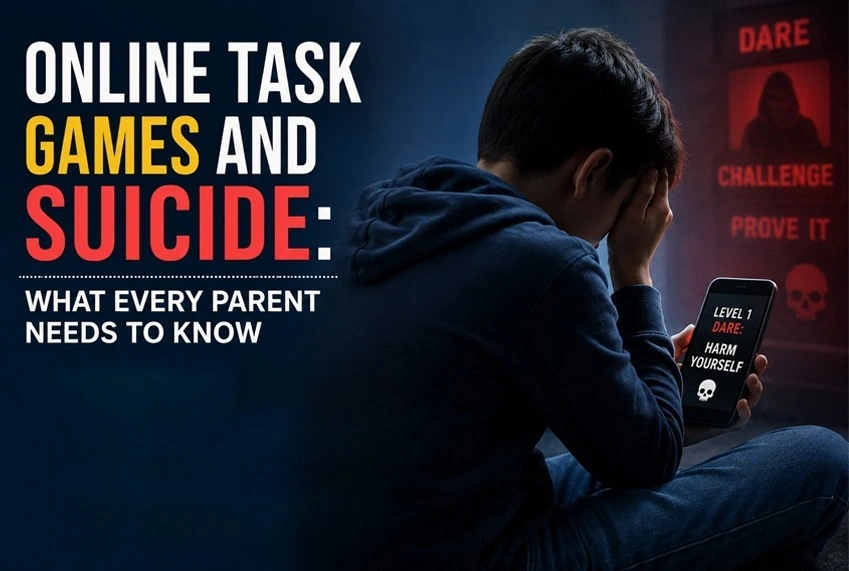
Over the last few years, a disturbing digital phenomenon has repeatedly made headlines — online "task" or "challenge" games that draw in vulnerable teenagers and young adults, gradually isolating them and, in the most tragic cases, pushing them toward self-harm and suicide. Dr. Pranshu Agarwal, psychiatrist at Happy Minds Psychiatry Clinic, has seen firsthand how digital influences, peer pressure, and untreated emotional distress can combine into a dangerous mix for young minds.
This blog is not meant to describe how these games work or what their "tasks" involve. Instead, our goal is to help parents, teachers, and caregivers understand the psychological vulnerabilities these games exploit, recognise the warning signs early, and know when and how to seek professional help.
What Are Online "Task" or "Challenge" Games?
These are loosely structured online activities — often spread through social media, messaging apps, or gaming forums — that ask participants to complete a series of escalating tasks over several days or weeks. What typically begins as harmless or mildly risky behaviour can, in some documented cases, escalate toward isolation, secrecy, and psychological manipulation of participants who are already emotionally vulnerable.
It's important to understand that these games do not "cause" suicide in a healthy, well-supported young person. Rather, they tend to target and amplify pre-existing vulnerabilities — loneliness, untreated depression, low self-worth, family conflict, academic pressure, or a lack of trusted adult connection. Understanding this distinction is key, because it shifts the focus from fear of technology to genuine mental health awareness and early intervention.
Why Do Teenagers Get Drawn In?
Adolescence is a period of significant emotional and neurological change. Teenagers are naturally more prone to risk-taking, seeking identity, and craving belonging — and online spaces often fulfil needs that aren't being met elsewhere in their lives. Several factors make young people more susceptible:
- Emotional isolation: Teens who feel unheard or misunderstood at home may seek connection and validation elsewhere, including in anonymous online communities.
- Undiagnosed mental health conditions: Depression, anxiety, or untreated trauma can make a young person more susceptible to negative influence and manipulation.
- Academic and social pressure: Constant comparison, fear of failure, and performance anxiety — especially common among students in competitive academic environments — can erode self-esteem.
- Need for attention or validation: Some participants are drawn in by a desire to feel "seen," accepted, or part of something, even if that something is harmful.
- Curiosity and impulsivity: Adolescent brains are still developing the prefrontal cortex regions responsible for risk assessment and impulse control, making teens more vulnerable to peer influence and dares.
- Secrecy as a red flag amplifier: Many of these games encourage participants to keep their involvement hidden from parents and friends, cutting them off from the very support systems that could protect them.
Understanding these underlying vulnerabilities helps parents realise that the real issue often isn't the game itself — it's the emotional gap the game is filling.
Warning Signs Parents and Caregivers Should Watch For
Because these online activities often thrive on secrecy, changes in a teenager's behaviour are usually the first — and sometimes only — visible clue. Some signs that may indicate a young person is struggling and could benefit from support include:
- Sudden withdrawal from family, friends, or activities they used to enjoy
- Increased secrecy around phone or internet use, or anxiety when devices are taken away
- Noticeable changes in sleep patterns — staying up unusually late or appearing sleep-deprived
- Declining academic performance or loss of interest in school
- Unexplained mood swings, irritability, or periods of sadness
- Expressions of hopelessness, worthlessness, or talking about life feeling "too hard"
- Avoiding eye contact or becoming defensive when asked about online activity
- New, unfamiliar online friendships that the teen is reluctant to discuss
- Physical signs of self-harm, or wearing long sleeves in unusually warm weather
- A sudden shift in personality — becoming unusually quiet, secretive, or emotionally flat
No single sign confirms a problem on its own, but a combination of these changes — especially sudden ones — is a strong reason to have a caring, non-judgemental conversation, and to consider a professional consultation.
The Psychological Vulnerabilities Behind the Risk
From a clinical standpoint, most young people who become deeply affected by harmful online influences already carry some degree of emotional distress. This is why our team, with over 14 years of clinical experience, emphasises that the real protective factor isn't restricting internet access alone — it's addressing the underlying emotional health of the child.
Common underlying conditions that increase vulnerability include:
- Depression: Persistent low mood, loss of interest, and feelings of hopelessness can make a teenager more susceptible to harmful influence.
- Anxiety disorders: Chronic worry and fear can drive teens to seek escape or control in unhealthy places.
- Low self-esteem: A poor sense of self-worth can make external validation — even from harmful sources — feel important.
- Family conflict or lack of communication: When home does not feel like a safe space to express emotions, teens look elsewhere.
- Bullying or social exclusion: Both online and offline bullying significantly increase emotional vulnerability.
- Previous trauma: Unresolved grief, abuse, or major life changes (like relocation or parental separation) can leave lasting emotional wounds.
Addressing these root causes through professional psychiatric care, therapy, and family support is far more effective than focusing solely on device restrictions.
How Parents Can Protect Their Children
Prevention starts with connection, not surveillance alone. Here are steps parents and caregivers can take:
1. Build Open, Judgement-Free Communication
Create an environment where your child feels safe discussing their feelings, fears, and online experiences without fear of punishment. Regular, casual conversations work better than interrogation.
2. Stay Involved in Their Digital World
Understand the platforms, apps, and games your child uses — not to spy, but to stay informed and approachable if something concerning comes up.
3. Watch for Emotional Changes, Not Just Screen Time
Focus less on how many hours your child spends online and more on how they seem emotionally before, during, and after using their devices.
4. Encourage Real-World Connection
Support friendships, hobbies, sports, and family time that give your child a sense of belonging outside the digital world.
5. Take Every Warning Sign Seriously
Never dismiss comments about hopelessness, self-harm, or "not wanting to be here" as attention-seeking. Take them seriously every single time, and seek professional help immediately.
6. Seek Professional Help Early
If you notice sustained changes in mood, behaviour, or sleep, consult a qualified psychiatrist rather than waiting for things to "resolve on their own." Early intervention significantly improves outcomes.
How a Psychiatrist Can Help
At Happy Minds Psychiatry Clinic, our approach with young patients and their families is structured and compassionate:
- Careful, confidential assessment to understand the underlying emotional cause — not just the surface behaviour
- Age-appropriate therapy, including Cognitive Behaviour Therapy (CBT), to help teens build healthier coping mechanisms
- Family counselling to rebuild communication and trust between parents and children
- Minimal necessary medication, used only when clinically required, alongside therapy
- A safe, non-judgemental space where teenagers can speak openly about pressures, fears, and online experiences
- Ongoing support, recognising that recovery is a process, not a single consultation
As a trusted name in psychiatric care, Happy Minds Psychiatry Clinic ensures complete confidentiality, allowing both teenagers and parents to seek help without fear of stigma or judgement.
Talking to Your Teen: A Gentle Starting Point
If you're worried about your child, you don't need the "perfect" conversation to begin. Simple, caring questions can open the door:
- "You've seemed a little different lately — do you want to talk about it?"
- "I'm not here to judge or take your phone away. I just want to understand how you're feeling."
- "Is there anything online that's been bothering you or making you feel pressured?"
Listen more than you speak. Validate their feelings before offering solutions. And if the conversation reveals distress, hopelessness, or anything concerning, don't wait — reach out to a mental health professional the same day.
When to Seek Immediate Help
Please seek urgent professional or emergency support if your child:
- Talks about wanting to die or "not existing" anymore
- Shows signs of self-harm
- Gives away prized possessions or says goodbye in unusual ways
- Suddenly seems "at peace" after a period of deep distress (this can sometimes indicate a decision has been made, and requires immediate attention)
In such situations, do not leave the child alone, remove access to obvious means of harm, and seek emergency psychiatric help immediately.
Final Thoughts
Online task games and challenges are a symptom of a much larger issue — the emotional gaps that vulnerable young people are trying to fill. The most powerful protection isn't fear or restriction; it's connection, awareness, and timely professional support.
If you notice warning signs in your child, or simply want a professional opinion for peace of mind, confidential consultations are available at Happy Minds Psychiatry Clinic, Gomti Nagar. With over 14 years of experience treating adolescents and families, the clinic offers a safe, structured, and compassionate path toward healing.
Medical Disclaimer: This blog is for general educational and awareness purposes only and does not replace professional medical advice, diagnosis, or treatment. If you or your child is experiencing mental health concerns or immediate risk, please seek help from a qualified mental health professional promptly.
Frequently Asked Questions (FAQs)
1. What are online task or challenge games?
Online task or challenge games are activities shared through social media, messaging apps, or online communities that may involve escalating challenges and can be harmful to emotionally vulnerable teenagers.
2. What warning signs should parents watch for?
Sudden withdrawal, increased secrecy around devices, sleep changes, mood swings, declining academic performance, hopelessness, or signs of self-harm can be important warning signs.
3. How can parents protect teenagers from harmful online influences?
Parents should maintain open communication, stay aware of their child’s digital activities, focus on emotional changes, encourage real-world connections, and take warning signs seriously.
4. When should parents seek professional help?
Professional help should be considered when there are sustained changes in mood, behaviour, or sleep, or when a teenager expresses hopelessness, self-harm, or thoughts about dying.